100% Bonus Depreciation Is Here to Stay! Learn more.
100% Bonus Depreciation Is Here to Stay! Learn more.
100% Bonus Depreciation Is Here to Stay! Learn more.
100% Bonus Depreciation Is Here to Stay! Learn more.
100% Bonus Depreciation Is Here to Stay! Learn more.
100% Bonus Depreciation Is Here to Stay! Learn more.
100% Bonus Depreciation Is Here to Stay! Learn more.
100% Bonus Depreciation Is Here to Stay! Learn more.
100% Bonus Depreciation Is Here to Stay! Learn more.
100% Bonus Depreciation Is Here to Stay! Learn more.
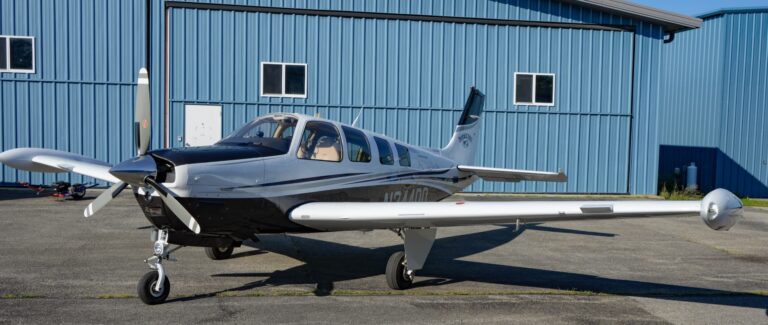
The Piper PA-34 Seneca is a six-seat, twin-engine retractable that has been the default step-up airplane for single-engine owners for fifty years. AirMart has brokered pre-owned Senecas from our Lexington, Kentucky base since the 1990s, and we sell to buyers across the United States. If nothing in inventory fits, call (859) 233-9399 — we source Senecas that never hit the public listing sites.

Every airplane below has been logbook-verified and condition-assessed before it went on our floor. We don't list airplanes we haven't looked at.
That happens — good ones move fast, and we don't list airplanes we haven't inspected. Tell us the variant, the budget, and the mission you have in mind and we'll work our seller network to find it. Call (859) 233-9399 or send us your requirements.
Inventory moves weekly. The live, filtered list of every Piper Seneca we currently hold is always at our Seneca inventory page, and our full fleet is on the aircraft for sale page.
Most Seneca listings you'll find online are classified ads. Somebody posts an airplane, you call a stranger, and you figure the rest out yourself.
Before an airplane goes into our inventory we've looked at the logs. And when you're buying, we handle the parts of the deal that go wrong most often: pre-buy coordination with a shop that knows PA-34s, a valuation you can check against actual comparable sales, financing introductions, escrow, title search, and closing.
We've been doing this since the 1990s, and we've walked buyers away from airplanes that looked fine in photos.
Our buyers rate us 4.9 out of 5 across 157 reviews.


Piper built the Seneca as a twin-engine version of the Cherokee Six, and the family resemblance is obvious the first time you walk up to one. Same fuselage cross-section, same big rear door. First flight was April 1967, certification came in May 1971, and the airplane went on sale as a 1972 model. Piper built 5,037 of them across five generations before production ended in 2019.
One thing set the Seneca apart from other light twins right from the first airplane: counter-rotating propellers. The right engine's crankshaft turns the opposite direction from the left, so neither engine is the critical engine. Lose one and the airplane behaves the same either way. Every other light twin of that era made you memorize which failure was the bad one. That single design decision is a big part of why flight schools still buy Senecas for multi-engine training.
The Seneca was also license-built abroad, as the EMB-810 by Embraer in Brazil and the M-20 Mewa by PZL-Mielec in Poland. Parts availability has never been a problem.
The five generations are genuinely different airplanes. Getting this right matters, because "Seneca" covers everything from a $110,000 trainer to a G1000-equipped twin that sold new for over a million dollars.
Two Lycoming IO-360-C1E6 engines, 200 hp each, with the right-hand LIO-360-C1E6 turning backwards for the counter-rotating setup. Gross weight 4,000 lbs. TBO is 2,000 hours, the longest of any Seneca.
Short production run and dated handling — Piper redesigned the control surfaces for the II specifically because owners complained. Cheapest way into a Seneca, but you're buying a fifty-year-old airframe with the least capability.
From ~$110,000Piper certified it in July 1974 and built 2,588 of them — more than every other variant combined. The T in the designation is the important part: turbocharged Continental TSIO-360-E or EB engines, still 200 hp, still counter-rotating. Turbocharging is what gave the Seneca real altitude capability.
Piper also fixed the handling complaints with bigger balanced ailerons, a rudder anti-servo tab, and a stabilator bobweight. Gross weight went up to 4,570 lbs, and club seating became an option. Cruise runs about 170 knots at 12,000 feet on 65% power, and up to 188 knots at economy cruise higher up. TBO is 1,800 hours.
If you're transitioning from a Bonanza or a Saratoga and want a twin without a turboprop budget, this is the airplane to look at first.
$150,000 – $220,000Continental TSIO-360-KB engines rated 220 hp for takeoff, which is a meaningful climb improvement over the II. One-piece windshield, redesigned instrument panel, gross weight up to 4,750 lbs. Over 930 built.
The III is where to look if you fly heavy or out of high-density-altitude airports.
$180,000 – $280,000Cleaned-up cowlings for a few extra knots and interior updates. Only 71 built, so they rarely come to market. When one does, it usually sells fast and commands a premium over a III with similar times.
Premium over Seneca IIIIntercooled Continental TSIO-360-RB engines, 220 hp for takeoff and 200 hp continuous. Redesigned cowls again, and later airplanes came with Garmin G1000 glass. Cruise up to 198 knots, service ceiling 25,000 feet, and Piper advertised the highest single-engine service ceiling in its class.
The Seneca V is not pressurized. No Seneca ever was. Above 12,500 feet you're on oxygen, same as every other Seneca. If you need a pressurized cabin, you're shopping for a different airplane.
$300,000 – $500,000+We keep a Seneca V performance and specification sheet on file if you want the full numbers.
Figures below are typical for each variant. Always confirm against the specific airplane's POH and equipment list.
| Specification | Seneca I | Seneca II | Seneca III | Seneca V |
|---|---|---|---|---|
| Engines | 2 × Lycoming IO-360-C1E6 | 2 × Continental TSIO-360-E/EB | 2 × Continental TSIO-360-KB | 2 × Continental TSIO-360-RB |
| Power | 200 hp, normally aspirated | 200 hp, turbocharged | 220 hp takeoff, turbocharged | 220 hp takeoff / 200 hp cont. |
| TBO | 2,000 hrs | 1,800 hrs | 1,800 hrs | 1,800 hrs |
| Cruise | ~160 kt | 170–188 kt | ~190 kt | up to 198 kt |
| Max range | ~700 nm | 725–870 nm | ~800 nm | ~700–715 nm |
| Gross weight | 4,000 lbs | 4,570 lbs | 4,750 lbs | 4,750 lbs |
| Useful load | ~1,300 lbs | ~1,400 lbs | ~1,400 lbs | 1,330–1,400 lbs |
| Fuel capacity | 93 gal | 93 or 123 gal | 123 gal | 122 gal |
| Seats | 6 | 6 (7 optional config) | 6 | 6 |
Manufacturer useful load numbers assume a bare airplane. A Seneca V with air conditioning, known-ice equipment, and a full co-pilot panel typically lands closer to 1,130 lbs. Fill 122 gallons and you've used 732 lbs of that on fuel, leaving room for three adults and light bags. You cannot fill the seats and the tanks at the same time. Nobody can, in this class. Plan trips accordingly.
Direct operating cost runs $300 to $450 per hour depending on variant and how much you fly it. A comparable turboprop starts at three times that.
Most Senecas are certified for flight into known icing with boots, hot props, and heated windshield panels. Combine that with turbocharging and you can go over weather instead of around it — the actual reason people buy twins for family travel.
Counter-rotating props again. Vmc demonstrations are less dramatic in a Seneca than in almost anything else with two engines, which is why the airplane has stayed in training fleets for five decades.
5,037 airframes built and a long production run means the parts pipeline is healthy and most twin-capable shops have seen a PA-34 before. That is not true of every light twin from this era.
Usually someone flying a Bonanza, Saratoga, or Cherokee Six who wants a second engine for night, IFR, and over-water or mountain legs. The Seneca II is the common landing spot.
Regional trips inside about 500 miles, where the Seneca's speed and weather capability beat driving and the numbers beat chartering. Seneca III and V models get most of this traffic.
The multi-engine rating market runs on Senecas. Predictable handling, available parts, and lower acquisition cost than a new twin trainer.
Purchase price is the smaller half of the conversation. Here's what buyers actually spend.
A Seneca II burns 24 to 27 gph at cruise. Turbocharged III and V models run 26 to 30 gph.
Two engines, and this is where Seneca ownership gets expensive. TSIO-360 overhauls run $45,000 to $65,000 each. Turbochargers, exhaust, and prop overhauls sit on top of that.
If nothing turns up. Twins take longer than singles and there are two of everything. Budget for the annual that finds something, because eventually one does.
For a Seneca II at $175,000 hull value. Depends heavily on total time, multi-engine time, and instrument currency. Low-time multi pilots should get quotes before making an offer.
Hangar runs $300 to $800 a month depending on where you keep it. Add database subscriptions, ADs, and annual pilot currency — before you fly an hour.
Most owners flying 100 to 150 hours a year should plan on this range, everything included.
Pre-owned Senecas range from about $110,000 for an early Seneca I to over $500,000 for a late Seneca V with G1000 avionics. Most transactions happen in the Seneca II range of $150,000 to $220,000. Condition, engine times, avionics, and damage history move prices more than model year does.
It's one of the better choices. Counter-rotating propellers mean there's no critical engine, so engine-out handling is symmetrical and more predictable than in most light twins. Insurance companies know the type well, which helps when you're a low-time multi pilot. Expect to need 10 to 25 hours of dual before most insurers will cover you solo.
The III has Continental TSIO-360-KB engines rated 220 hp for takeoff versus 200 hp in the II, which improves climb and single-engine performance. It also has a higher gross weight of 4,750 lbs, a one-piece windshield, and a redesigned panel. Both are turbocharged. The II is cheaper and far more common.
No. No Piper Seneca variant has ever been pressurized. The Seneca V is turbocharged with a 25,000 ft service ceiling, but the cabin is unpressurized and supplemental oxygen is required above 12,500 ft.
Plan on 700 to 750 nautical miles with IFR reserves at normal cruise power. Economy cruise with full fuel can stretch a Seneca II toward 870 nm, but that's a best-case number at reduced power. Real trip planning should use the lower figure.
Continental TSIO-360 engines used in the Seneca II through V have a 1,800-hour recommended TBO. The normally aspirated Lycoming IO-360 engines in the Seneca I are 2,000 hours. Recommended TBO isn't a legal limit for Part 91 operations, but it matters for valuation and insurance.
Most Senecas were built or later equipped for flight into known icing with pneumatic boots, heated props, and a heated windshield panel. Certification is aircraft-specific, so verify the equipment list and confirm every component works before you rely on it.
Most pilots finish an add-on multi-engine rating in 10 to 15 hours. The Seneca's counter-rotating propellers make Vmc and single-engine work more manageable than in twins with a critical engine, which is part of why schools use them.
Tell us the variant, the budget, and how you plan to fly it. We'll tell you honestly whether what you want exists at that number — and if it does, we'll find it.
Call AirMart at (859) 233-9399