

100% Bonus Depreciation Is Here to Stay! Learn more.

100% Bonus Depreciation Is Here to Stay! Learn more.

100% Bonus Depreciation Is Here to Stay! Learn more.

100% Bonus Depreciation Is Here to Stay! Learn more.

100% Bonus Depreciation Is Here to Stay! Learn more.

100% Bonus Depreciation Is Here to Stay! Learn more.

100% Bonus Depreciation Is Here to Stay! Learn more.

100% Bonus Depreciation Is Here to Stay! Learn more.

100% Bonus Depreciation Is Here to Stay! Learn more.

100% Bonus Depreciation Is Here to Stay! Learn more.

100% Bonus Depreciation Is Here to Stay! Learn more.

100% Bonus Depreciation Is Here to Stay! Learn more.

Aircraft Tax Strategy · 2026 Buyers

Bonus Depreciation for Aircraft

Bonus depreciation lets a business deduct the full purchase price of a qualifying new or pre-owned aircraft in the year it is placed in service. Here is how the 2025 law change, the more-than-50% business use test, and the December 31 placed-in-service deadline affect a 2026 purchase.

Family owned 55+ years New & pre-owned aircraft qualify

Educational content only. Not tax, legal, or financial advice. Consult your tax professional.

2023 Cessna 182T Skylane for sale at AirMart, a single-engine aircraft that can qualify for bonus depreciation
100% Year-One Deduction
100%
First-year deduction
>50%
Qualified business use
Dec 31
Placed-in-service deadline
6yrs
Standard MACRS schedule
The Basics

What is bonus depreciation for aircraft?

Bonus depreciation is a federal tax provision that allows businesses to deduct the full purchase price of a qualifying aircraft in the year it is placed in service, rather than spreading the cost across multiple years under standard depreciation schedules. Instead of recovering your investment over six years using the Modified Accelerated Cost Recovery System (MACRS), you claim the entire deduction in Year One.

New or pre-owned

A factory-fresh Cessna 182 qualifies on the same basis as a 2019 Cirrus SR22 or a 2021 Piper M350. The tax code does not distinguish between new and used for bonus depreciation purposes.

More than 50% business use

The aircraft must be used more than 50% for business in the year it is placed in service, and that threshold must hold in later years to avoid recapture. Revenue flights, business meetings, and site visits count. Personal use does not.

Financing doesn’t shrink it

The deduction is based on the full purchase price, however you finance it. Finance 80% and pay 20% in cash, and you still deduct 100% of the price, not just your down payment.

A timing benefit

You recover the cost faster, which reduces current-year tax liability, but the tax is not eliminated. When you sell, gain up to the amount deducted is generally recaptured as ordinary income.

Before you structure a deal

Consult your tax professional before structuring an acquisition around this strategy.

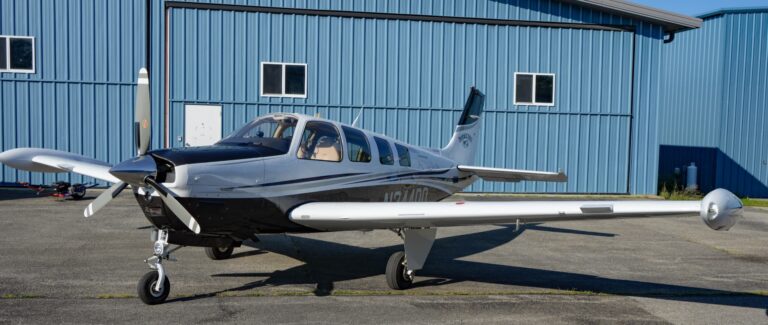
2007 Beechcraft G36 Bonanza on the ramp at AirMart in Lexington, Kentucky
Pre-owned aircraft qualify on the same basis as new
The 2025 Law Change

The One Big Beautiful Bill Act and what changed in 2025

Prior to 2025, bonus depreciation had been phasing down incrementally since 2022, falling from 100% to 80% in 2023, 60% in 2024, and 40% in 2025. That created timing pressure for aircraft buyers who wanted the full deduction but faced an uncertain legislative timeline. The One Big Beautiful Bill Act, signed into law on July 4, 2025, permanently restored 100% bonus depreciation for qualifying aircraft and eliminated the phase-down schedule entirely.

Signed into law
July 4, 2025
Applies to aircraft
Acquired & placed in service after Jan 19, 2025
Sunset date
None scheduled
Eligible aircraft
New and pre-owned

For aircraft acquired and placed in service after January 19, 2025, the full purchase price can be deducted in the year placed in service, provided the acquisition date falls after the effective date and the aircraft meets qualified business use requirements.

Standard Depreciation

How aircraft depreciation works without the bonus

Before discussing what bonus depreciation offers, you need to understand what standard depreciation looks like. The IRS classifies aircraft under the Modified Accelerated Cost Recovery System (MACRS), typically as five-year property. Under this system, depreciation spreads across six calendar years, with the largest deductions front-loaded into years one and two.

  • The deduction is not linear: the purchase price depreciates in unequal annual portions.
  • Approximately one-fifth of the cost is recovered in year one and roughly one-third in year two.
  • Smaller percentages follow in the remaining years, and full recovery takes six years.

This timing matters when you are evaluating what portion of your purchase price becomes available as a tax deduction each year. Standard MACRS does not allow you to deduct the entire aircraft cost upfront, which affects cash flow planning and year-one tax outcomes.

Cost recovered each year under standard MACRS

Year 1
20%
Year 2
32%
Year 3
19.2%
Year 4
11.52%
Year 5
11.52%
Year 6
5.76%

Five-year property, half-year convention. Your actual schedule depends on the convention that applies to your tax year; confirm with your tax professional.

Worked Example

Bonus depreciation aircraft example: comparing first-year deductions

Consider a business owner purchasing a Cirrus SR22T and placing it in service with qualified business use above 50%. The difference between standard MACRS depreciation and bonus depreciation in year one is not subtle.

Without the bonus

Standard MACRS depreciation

~20%of price in year one

The first-year deduction is a fraction of the purchase price. The aircraft depreciates over a six-year schedule, with the largest percentage early and smaller amounts in later years. The full price becomes deductible, but spread across multiple tax years.

With bonus depreciation

100% bonus depreciation

100%of price in year one

The entire purchase price becomes deductible in year one. Instead of recovering the cost gradually over six years, the deduction moves to the year the aircraft is placed in service. That timing difference is the entire value of the strategy.

Year-one deduction estimator

Illustrative only
$
%

Assumes more than 50% qualified business use, half-year MACRS convention, and federal tax only. Excludes state tax, recapture, entity structure, and passive activity limits.

Year-one deduction, MACRS
$100,000
Year-one deduction, bonus
$500,000
Deduction moved into year one
$400,000
Illustrative year-one federal tax effect
$148,000
Tax yearMACRSBonus
Same total, different timing

For a business owner in a higher marginal federal tax bracket, the year-one deduction produces immediate tax savings. The total deduction over time stays the same; what changes is when you can claim it. This is a timing advantage, not a permanent reduction in tax liability: the savings appear in year one, and the recapture conversation occurs at sale. Consult your tax professional to model the outcome for your marginal rate, entity structure, and state tax treatment before making an acquisition decision based on depreciation strategy.

Eligibility

What qualifies: business use, acquisition timing, and placed-in-service rules

Three requirements determine whether an aircraft qualifies for bonus depreciation in the year you claim the deduction.

01

More than 50% qualified business use

The aircraft must be used for qualified business purposes more than 50% of the time in the year placed in service and every year thereafter.

  • Counts: revenue flights, business meetings, site visits, client transportation, and similar commercial activity
  • Doesn’t count: personal flights, recreational use, and travel unrelated to business operations
Rule of thumb

The measurement is usage hours, not calendar days. Log the purpose of every flight from delivery forward. The IRS does not accept reconstructed records or estimates.

02

Acquired after the effective date

The aircraft must be acquired after the applicable effective date. Contract execution date matters, not delivery date.

Consult your tax professional on the acquisition date requirement for your purchase year, as binding contract rules can shift the qualifying date depending on when the agreement was signed.

Rule of thumb

Keep the signed, dated purchase agreement with your tax records. It, not the delivery date, anchors your acquisition timing.

03

Placed in service by December 31

The aircraft must be placed in service by December 31 of the tax year in which you want to claim the deduction. Placed in service means the aircraft is delivered, registered to you, and available for use in your business.

Rule of thumb

A signed purchase agreement is not enough. An aircraft delivered on January 2 cannot be deducted in the prior tax year, no matter when the contract was executed.

Business use is measured every year

If your aircraft meets the greater-than-50% threshold in year one but drops to 50% or below in a later year, bonus depreciation claimed in the first year can be recaptured as ordinary income. The recapture calculation is complex and depends on how many years the aircraft remained above the threshold. Maintain detailed flight logs with the purpose of each trip documented at the time of the flight, not reconstructed later.

Year-End Planning

Aircraft bonus depreciation in 2026: year-end timing and what buyers need to know

December 31, 2026 is the deadline that matters for bonus depreciation claimed in tax year 2026. The aircraft must be delivered, registered, and available for use by year-end. A signed purchase agreement is not enough: the aircraft must physically close, pass through pre-buy inspection if required, complete FAA registration, and be ready for qualified business use before the calendar year ends.

  1. Locate the right aircraft

    The closer you get to year-end, the fewer options remain in inventory.

  2. Schedule the pre-buy inspection

    Qualified facilities may have waiting periods in peak buying season, and findings can require negotiation.

  3. Complete financing underwriting

    Even well-qualified buyers need time for underwriting.

  4. Clear title, liens, and escrow

    Title searches, lien releases on pre-owned aircraft, and escrow coordination each add days.

  5. Register with the FAA

    Registration to you is part of being placed in service.

  6. Deliver and place in service by Dec 31

    Adverse weather can delay ferry flights, so build in margin.

Start early

A buyer who starts the process in mid-November faces meaningful risk of missing the December 31 deadline. If you are evaluating aircraft in late summer or early fall, factor in time to locate the right aircraft, conduct due diligence, arrange financing, and coordinate delivery logistics.

2023 Cessna T182T Turbo Skylane at AirMart, ready for delivery before the year-end placed-in-service deadline
Aircraft must be delivered, registered & ready by Dec 31
Eligible Aircraft

New and pre-owned aircraft both qualify

Bonus depreciation applies equally to new and used aircraft. A 2024 Cessna 182 Skylane purchased today qualifies on the same basis as a 2019 Cirrus SR22, a 2021 Piper M350, or a 2018 Beechcraft Bonanza. The law does not require factory-new purchases; the only constraints are the business use threshold and the December 31 placed-in-service deadline.

That expands the pool of qualifying aircraft well beyond factory orders and into the pre-owned market, where the majority of transactions occur, from high-performance singles to cabin-class twins like the 1982 Cessna 340A and the Cessna 414 RAM VI. For buyers evaluating cost per hour or mission fit, the tax treatment is identical whether the aircraft comes from the factory or the secondary market.

Consult your tax professional to verify that a specific aircraft meets all current requirements before you close.

Know the Risks

Recapture risk and state tax considerations

Bonus depreciation does not create risk-free tax savings. The deduction is a timing benefit, not permanent tax forgiveness.

Recapture if business use drops

If your aircraft’s qualified business use drops to 50% or below in any subsequent year, the bonus depreciation can be recaptured. The IRS treats the previously deducted amount as ordinary income in the year the business use threshold fails.

That creates a tax liability that can exceed the cash savings realized in year one if your marginal rate has changed or your business income structure has shifted. This recapture provision applies regardless of whether the aircraft is still owned or has been sold.

State conformity varies

State tax treatment of federal bonus depreciation varies by jurisdiction. Some states conform automatically, allowing the same first-year deduction at the state level. Others decouple partially or entirely, requiring add-backs or spreading the deduction over multiple years under state-specific rules.

A federal tax benefit does not guarantee state-level savings, and in states with high marginal rates, the divergence can materially reduce the net advantage of the acquisition. Consult a tax professional licensed in your state before structuring an aircraft purchase around bonus depreciation assumptions.

Working With AirMart

How AirMart can help: inventory, financing, and turnkey aircraft for 2026

This content is for educational purposes only and does not constitute tax, legal, or financial advice. Consult your tax professional before making aircraft purchase decisions based on depreciation strategies.

AirMart can assist buyers in locating aircraft that meet qualified business use requirements and align with year-end acquisition timelines. Whether you are evaluating single-engine or light twin models, AirMart’s aircraft brokerage services position you to move quickly when the December 31 deadline matters for your tax planning. Learn more about AirMart.

Aircraft inventory

Identify suitable options ready for immediate business use in our aircraft for sale.

Aircraft valuation

Understand fair market value before committing to a purchase.

Financing assistance

Structure the acquisition in a way that supports your business objectives.

Closing coordination

Pre-buy inspections, title work, registration, and delivery logistics, with fewer delays before your placed-in-service date.

If you are planning an aircraft acquisition for 2026 and need to understand how timing, business use documentation, and transaction structure affect your eligibility for bonus depreciation, consult your tax professional first, then contact AirMart or call (859) 233-9399 to discuss available aircraft and next steps.

Beechcraft 58TC Baron light twin available through AirMart aircraft brokerage
Single-engine and light twin aircraft for business use
FAQ

Frequently asked questions about bonus depreciation for aircraft

Does financing reduce the deduction?

No. The deduction is based on the full purchase price of the aircraft, not your down payment or cash outlay. If you finance the majority of the purchase, you can still claim the entire acquisition cost as a deduction in year one, provided the aircraft meets qualified business use requirements and all other eligibility criteria.

Can I use Section 179 instead of bonus depreciation?

Yes, but bonus depreciation is usually better for aircraft. Section 179 limits the deduction to your taxable business income for the year, while bonus depreciation has no such cap. Most buyers lead with bonus depreciation and use Section 179 only when specific circumstances favor it. Consult your tax professional to determine which approach maximizes your benefit.

What counts as qualified business use?

Revenue flights, business meetings, site visits, client travel, and similar operational activities count toward qualified business use. Personal use does not. The IRS requires detailed records from the day you place the aircraft in service. If business use drops to 50% or below in any year, recapture rules may apply.

Does bonus depreciation apply to helicopters?

Yes. Helicopters follow the same rules as fixed-wing aircraft under current IRS guidance, including the more-than-50% qualified business use requirement and the placed-in-service deadline for the tax year you want the deduction. Consult your tax professional to verify current treatment.

What if I buy the aircraft in late December?

The aircraft must be placed in service by December 31 to count for that tax year’s deduction, not just under contract. Placed in service means delivered, registered, and available for use. Closings, pre-buy inspections, and financing all take time. Buyers planning a year-end deduction need to start the acquisition process well before November.

Do I need an LLC to claim bonus depreciation?

No specific entity is required. Sole proprietorships, partnerships, S-corporations, C-corporations, and LLCs can all claim bonus depreciation, but the structure affects how the deduction flows through to your personal return and whether passive activity limits apply. Consult your tax professional on the best structure for your situation before acquiring the aircraft.

Plan Your 2026 Purchase

Find an aircraft that can be placed in service before December 31

Talk with your tax professional about eligibility, then talk with AirMart about available aircraft, valuation, financing assistance, and closing timelines.

Based in
Lexington, Kentucky
Family owned
55+ years in aircraft sales

Elevate Your Journey â„¢

Specifications for this aircraft are believed to be accurate but are not warranted. It is the responsibility of the buyer to confirm all specifications, equipment, and times. AirMart does not represent or warrant the working order, merchantability, or operability of any equipment. Airplanes are dynamic assets whose condition, availability, and details may change without notice. All information is subject to independent verification and inspection by the buyer. Availability cannot be guaranteed, as the aircraft may be sold, leased, or withdrawn from the market at any time.
Google Rating
4.8
Based on 163 reviews
js_loader